
01
Libraries and public libraries
Do you want to attract people who do not come yet? We run workshops for your users, train your teams, and can compose a thematic library for your spaces.
Libraries and public libraries, charities, local authorities, care settings, prisons
Reading helps us become.
Are you looking for new ways to build connection and encourage the people you support to express themselves? We design and run bibliotherapy workshops using texts chosen for your audience. At the end of the cycle, you receive a summary of participants' feedback and our observations on the programme.
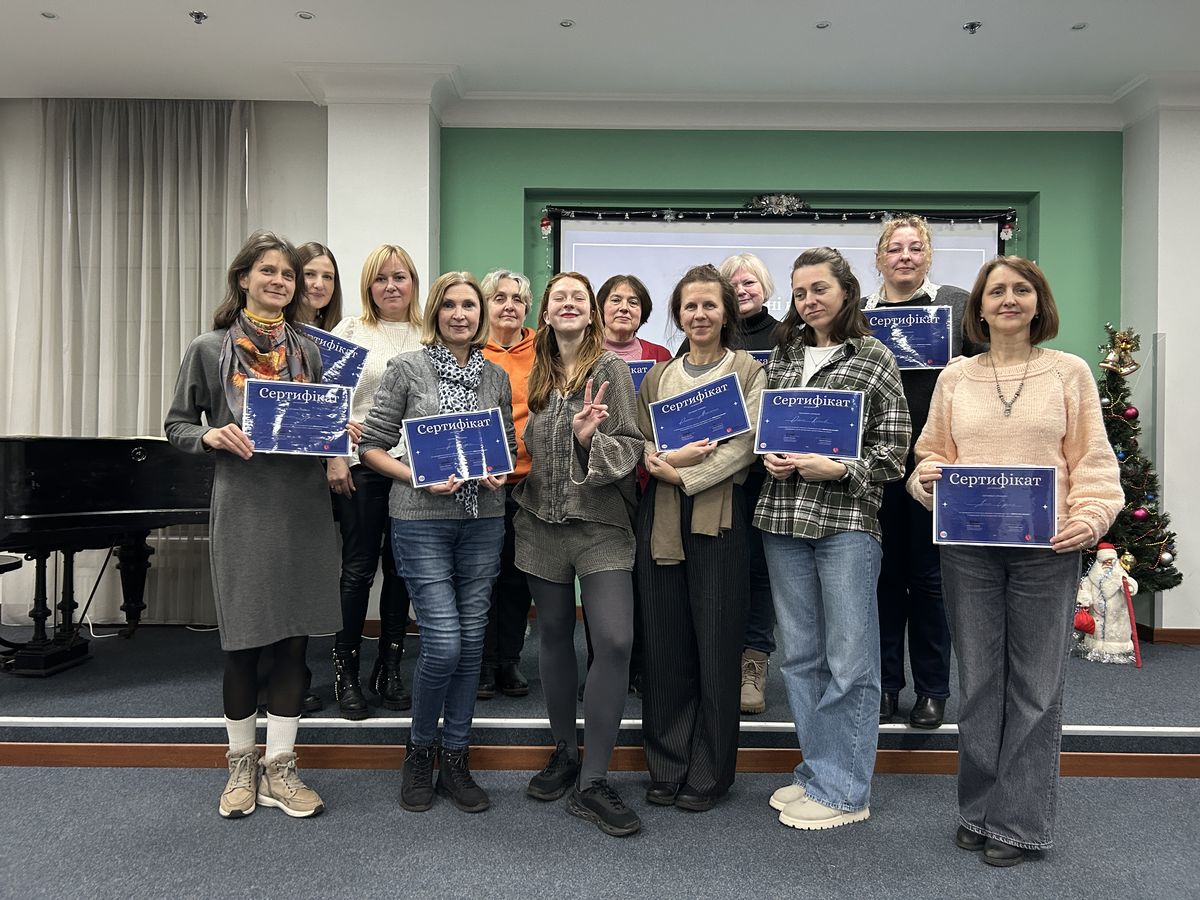
We also train your teams so that they can bring the method into their own practice and continue the approach beyond our involvement.
Nearly 500 bibliotherapy workshops · Qualiopi-certified training · Libraries of Emotions for Good European project
What is at stake
Isolation, insecurity, illness, recovery, detention. After a difficult journey, the people you support go through moments when words fail them.
Every new tool has to be adopted twice: by a team short of time to take on a method, and by a board or a funder asking what the work has changed.
Reading, when it is guided, opens doors that few tools reach. It still takes texts chosen for that particular audience, a setting that protects what people say, and a methodical approach to report on what happened. That is what we bring, ready to use.
Bibliotherapy is professional support through books that draws in particular on the contributions of cognitive science.
It does not replace medical or psychological care.
For which audiences
Each session follows the same three steps, built from field practice and research: understand, connect, commit.
We read together, then talk, first through the characters; anyone who wishes can connect it to their own experience.
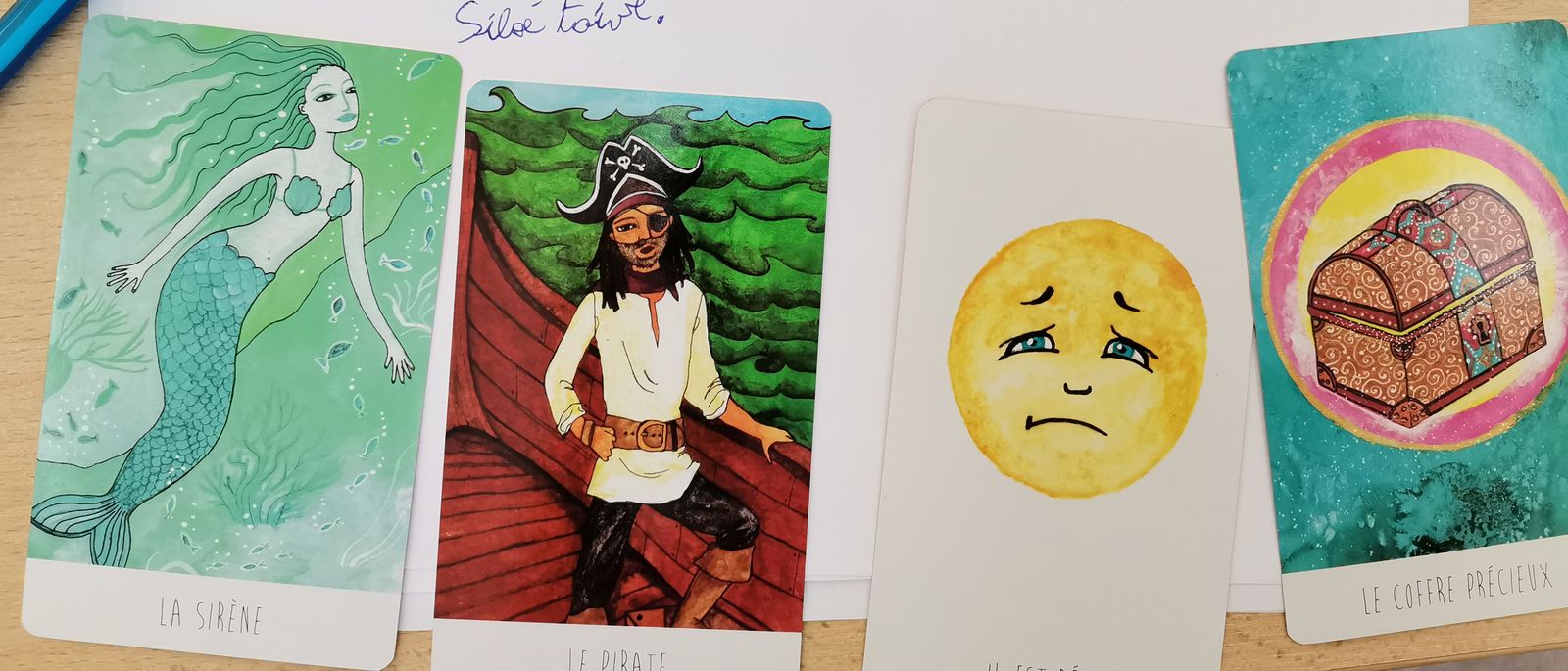
We bring literary points of view together to explore different ways of feeling and acting. Cards, drawing, selected objects, games or practices drawn from theatre can support the discussion. Texts, vocabulary and pace are adapted to the audience.
With people in vulnerable situations, we pay particular attention to what the texts may stir up. We set aside those that risk stigmatising or unsettling people, and always allow room to step back.
01
Do you want to attract people who do not come yet? We run workshops for your users, train your teams, and can compose a thematic library for your spaces.
02
The heart of our practice. Proven collections of texts for people recovering from a difficult journey and seeking to take back control of their story.
03
Alongside the charities that support them, workshops where we go through the characters to find words and a place of one's own again, at one's own pace. Each cycle is prepared with the teams who support them.
04
In hospital or in care settings, we work with the care teams, never in their place.
05
Including those supported by child protection services: for three years we have been working with young people in care who are far from reading, notably with the association Impactes, whose work we support. Going through the character makes it possible to name what is at stake without having to point to oneself or go into detail.
06
In residences or care homes, shared reading to maintain connection, memory and the pleasure of storytelling. The novel often opens the way to writing memories, with residents and their carers.
07
For the people you support as well as for your teams, employees or volunteers: shared reading opens a time to name what weighs on you and to take some distance. It does not replace medical care.
08
Workshops to turn time endured into time for thinking, speaking and imagining. Two programmes in prisons in 2026.
How a workshop unfolds
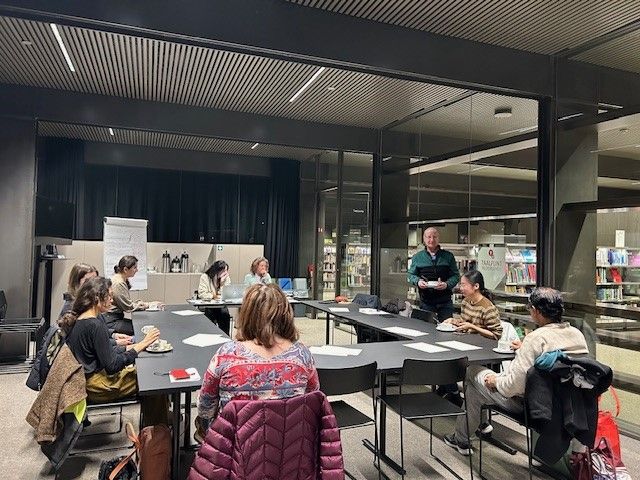
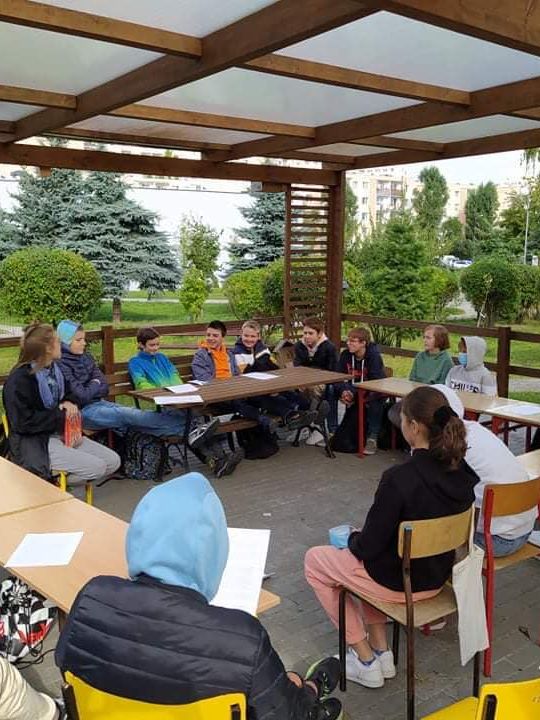
A group session lasts on average an hour and a half to two hours, with five to fifteen participants.
We recall the framework and the aim of the session, then everyone introduces themselves. Confidentiality and listening are established from the start.
A game, often using images, opens the session. A first text illustrates the theme so that everyone can make it their own.
We read together, often aloud, then talk through the characters. Everyone can link the theme to their own life.
A longer exercise around the texts, to spark a click, however small: an obstacle to remove, a lever to pull.
We bring together the key points, offer a small gift (a book, a card) and suggest further reading. A short questionnaire gathers first impressions.
Workshop themes
Themes are set before the workshop or cycle; they ensure a clear and engaging structure for participants. They also provide a framework for assessing, at the end, what the workshop brought.
We can also design a bespoke theme with you, as close as possible to your objectives.
Formats
On quotation
A first session to discover the method with your group and your team before committing to a cycle.
On quotation
We recommend five spaced-out sessions and texts chosen for your audience. The cycle allows the discussions to build over time. You receive a summary of the feedback gathered, observations and ideas for next steps, to share with your board or your funder.
On quotation
For your employees and volunteers, we offer tailor-made training so that they can bring the method into their own support work.
In person over one or two days, hybrid, or blended with online content. Everyone leaves with a first session written for their own audience, and we answer questions by e-mail for the following two months. Qualiopi-certified training.
On quotation
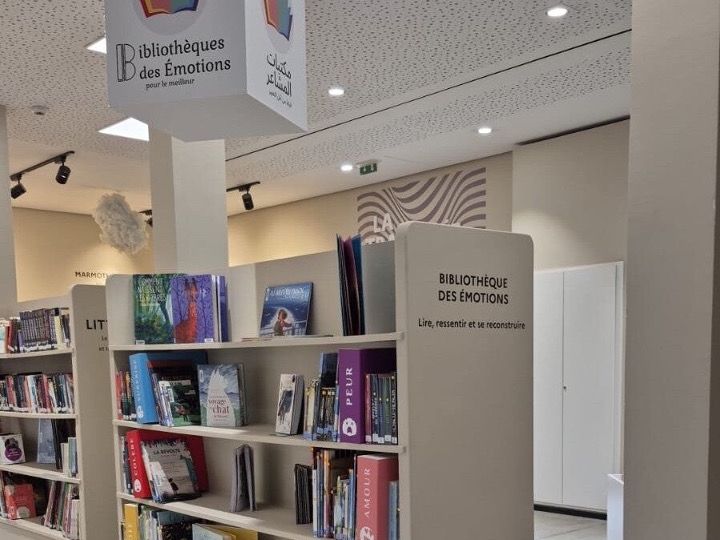
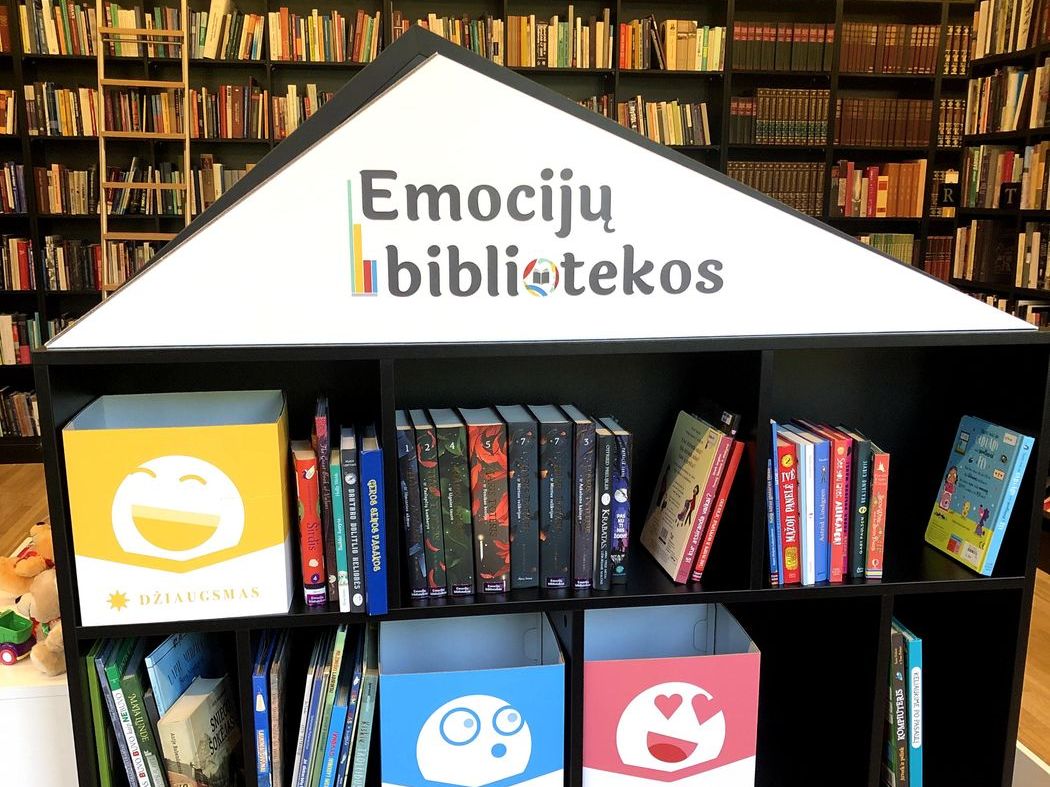
Extend the workshops with a thematic library so that reading continues after the cycle: 60 to 120 books chosen and arranged by emotion or by a theme specific to your organisation, in a unit made in France, recyclable, in your colours, installed on site and opened with a workshop.
For example, a Library of Emotions, of Possibilities, of the Imagination, of Peace or of Care. We compose with you the one that suits your audience, and together we find the name that reflects you.
You do not buy a library, you compose your own. The unit, its customisation and delivery are included in the quote; the books, the selection of titles and travel are priced separately.
Books given to participants are optional. Workshops often fit into sponsorship, social action or calls for projects, and team training can be funded as professional training: we help you put this together. Each programme adapts to your audience and your organisation.
Measurement
Every project has its own evaluation: questionnaires built for your audience and your objectives and, depending on the project, the KEI©, the impact-assessment method applied to emotions developed by Love for Livres.
At the end of a cycle, you receive a concise report: what participants experienced, what shifted for them, what we recommend next. It is the essential document for your board or your funder.
Across two European projects run in public libraries in seven countries, more than 160 participants:
96 %
expressed positive emotional responses
87 %
wanted to come back
We publish our work, including a pilot study on bibliotherapy published in 2022, and we are conducting research with Ghent University on the measurable effects of bibliotherapy. We report effects that are felt and observed, never a cure.
Our field projects
15 000
people trained
75
projects
12
countries
Since 2019, across all activities.
We have run nearly 500 bibliotherapy workshops in charities, libraries, hospitals, prisons, children's homes and local authorities.
A few examples.
Among the studies we have on our practice: in 2022, a pilot study conducted in Toulouse with the Patient Centricity department of Pierre Fabre, published in the Journal of Psychiatry and Cognitive Behaviour; in the European Bookpower project, supported by Erasmus+, the neuroscientist Samah Karaki led the impact study of our workshops with women in France, Spain and Italy: 96% positive impressions after the sessions, and all participants wanted to come back.
Libraries of Emotions for Good
We coordinate Libraries of Emotions for Good, a European project supported by Creative Europe from 2025 to 2027: nine partners in seven countries, 25 librarians trained and dedicated bibliotherapy spaces created in public libraries. The project is among the examples of good practice in the European report “Strengthening Europe through public libraries”, published in 2026 by the European Commission based on the work of an expert group mandated by the Council of the European Union, in the section on bibliotherapy and mental health support through reading.
References
What they say
“From the moment it was installed, readers were intrigued by the Library. Some head straight for it when they arrive. It works well with our users. The books are borrowed and we regularly have to make new selections based on emotions.”
“I went through the evaluations of your talk: you were a huge hit with our colleagues. It was really interesting and gave lots of people ideas. We are going to buy several copies of your book.”
“The participants were delighted and we had excellent feedback. Your approach was particularly interesting. […] I think we will add the literary tarot to our games library for our users.”
Working together
30 minutes to understand your audience, your constraints and your funding timetable.
Together we define the texts, the pace, the venue and the professional who will run the sessions.
Members of our team and practitioners from our network, trained in our method. Each session is prepared by our team.
At the end of the cycle, you receive a summary. We discuss possible next steps: continuing with the group, offering the cycle to another audience or training your team.
Frequently asked questions
No. It is a method of support through books, which under no circumstances replaces medical or psychological care. For the most vulnerable audiences, we work alongside the professionals who support them.
Not necessarily. Many people tell us they do not like reading before the session. The texts are short, read together, often aloud. Nobody is put on the spot: that is often where the desire to read comes back.
Workshops often fit into sponsorship, social action or calls for projects. Training your teams can be funded as professional training, as Love for Livres is Qualiopi certified (France). We help you put this together.
Workshops serve your beneficiaries straight away. Training makes your team autonomous over time. Many organisations start with a cycle, then train their teams.
Let's talk
Simply tell us about your audience, your objectives and your constraints. This first information will help us prepare a suitable proposal. Would you rather talk? Let's take thirty minutes.