
Charities, local authorities, care settings, public libraries
Workshops and cycles for the people you support, and training for your teams.
Institutions and charities →Definition · History · Method · Training
Bibliotherapy is a “method of support and of caring for oneself and others through books. It draws on the contributions of cognitive science to reveal the powers of fiction.”
Using chosen texts and with a trained person, bibliotherapy invites you to explore your emotions, discover other points of view and share a reading experience. At Love for Livres, we favour fiction and an approach informed by cognitive science.
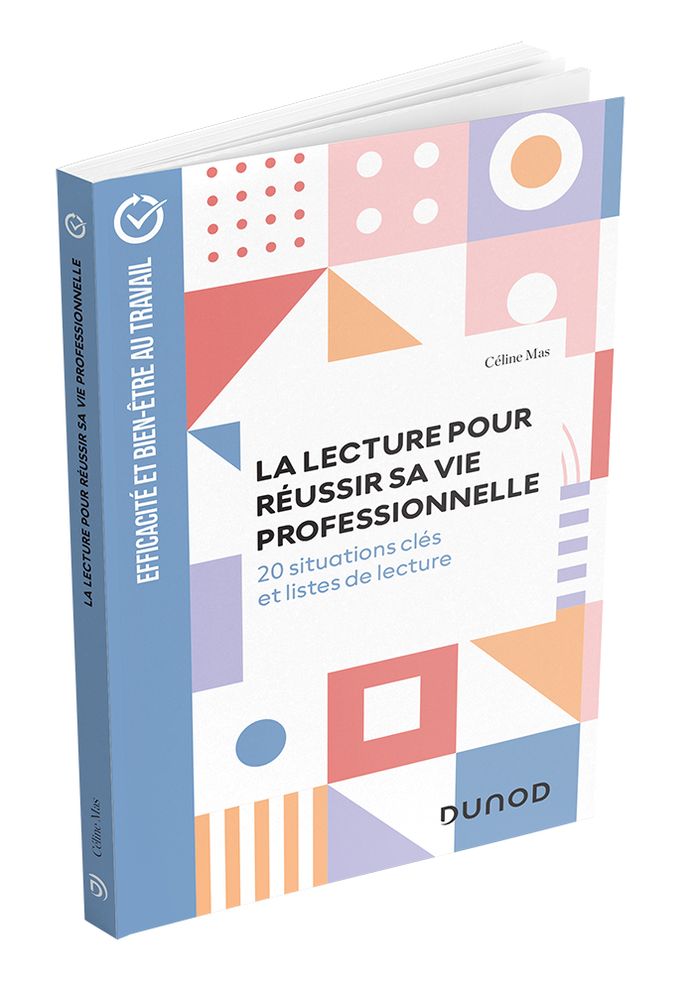
This definition comes from the chapter on bibliotherapy in Céline Mas's latest book, La lecture pour réussir sa vie professionnelle (Dunod, 2025). It brings together scientific work on the subject and our 10 years of practice.
No need to be a keen reader to take part.
What it is
Stories have a particular way of putting words to an emotion or making us see a situation differently. Bibliotherapy gives this experience a framework: readings chosen for an audience, an intention and a trained person to support the discussion.
The choice of texts and the support meet a precise intention: encouraging your expression, creating connection, supporting your mental health or developing your agency.
Today's context is anxiety-inducing. Books can be refuges, anchors, springboards to find calm, clarity or new momentum.
In 1950, the American psychologist Caroline Shrodes described it as “a process of dynamic interaction between the personality of the reader and literature, under the guidance of a trained person”. This is still the heart of the practice: an audience, texts chosen for it, a framework and a trained person to facilitate. Guided reading is a related practice, but not a synonym.
In our workshops, the focus is on what reading makes each person experience. There is no right interpretation to find, and no obligation to tell your own story. Our work is a form of support and has a demonstrated impact. Even so, it does not replace a diagnosis, a treatment or psychotherapy. In care settings, it is built together with the care teams to support a person in their search for calm, meaning or autonomy.
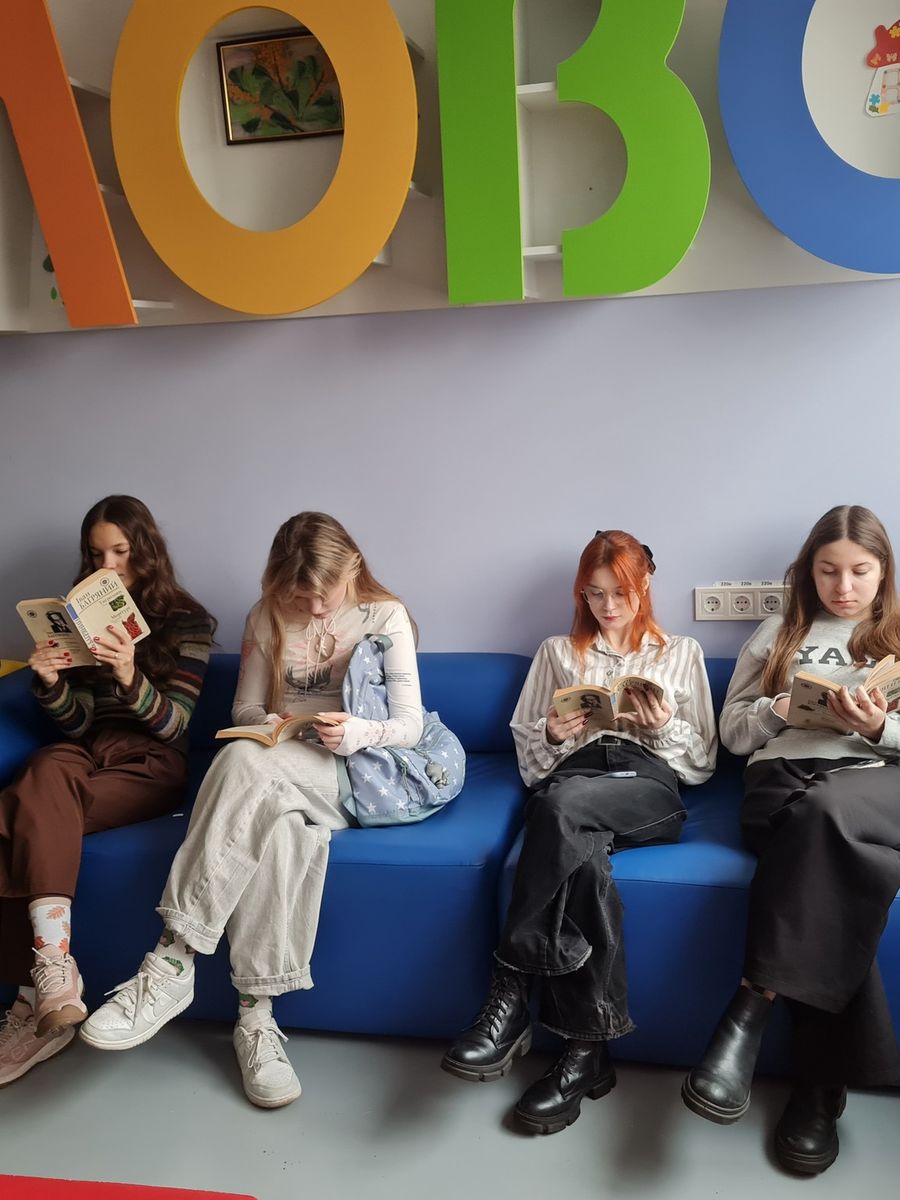
It is for everyone, at any age, whether or not you are going through a difficulty. Many people kept away from books by the ups and downs of their lives or the pressure of everyday life find their way back to reading. Every way of reading has its place.
Workshops can be designed for people of all ages, with texts, a precise theme, a key objective and defined facilitation methods. You can take part by listening to a text read aloud: you do not need to read a lot, or to feel comfortable speaking in a group.
Our method
Experience comes before words. We first feel the powers of a text, then take time to understand what it brings to the surface.
Our experience of nearly 500 workshops feeds a three-stage framework that we created and developed: understand, connect, commit. A welcome opens the session; a closing time lets everyone identify what they want to keep. This framework is a guide: the texts, activities, language and pace adapt to the people present.
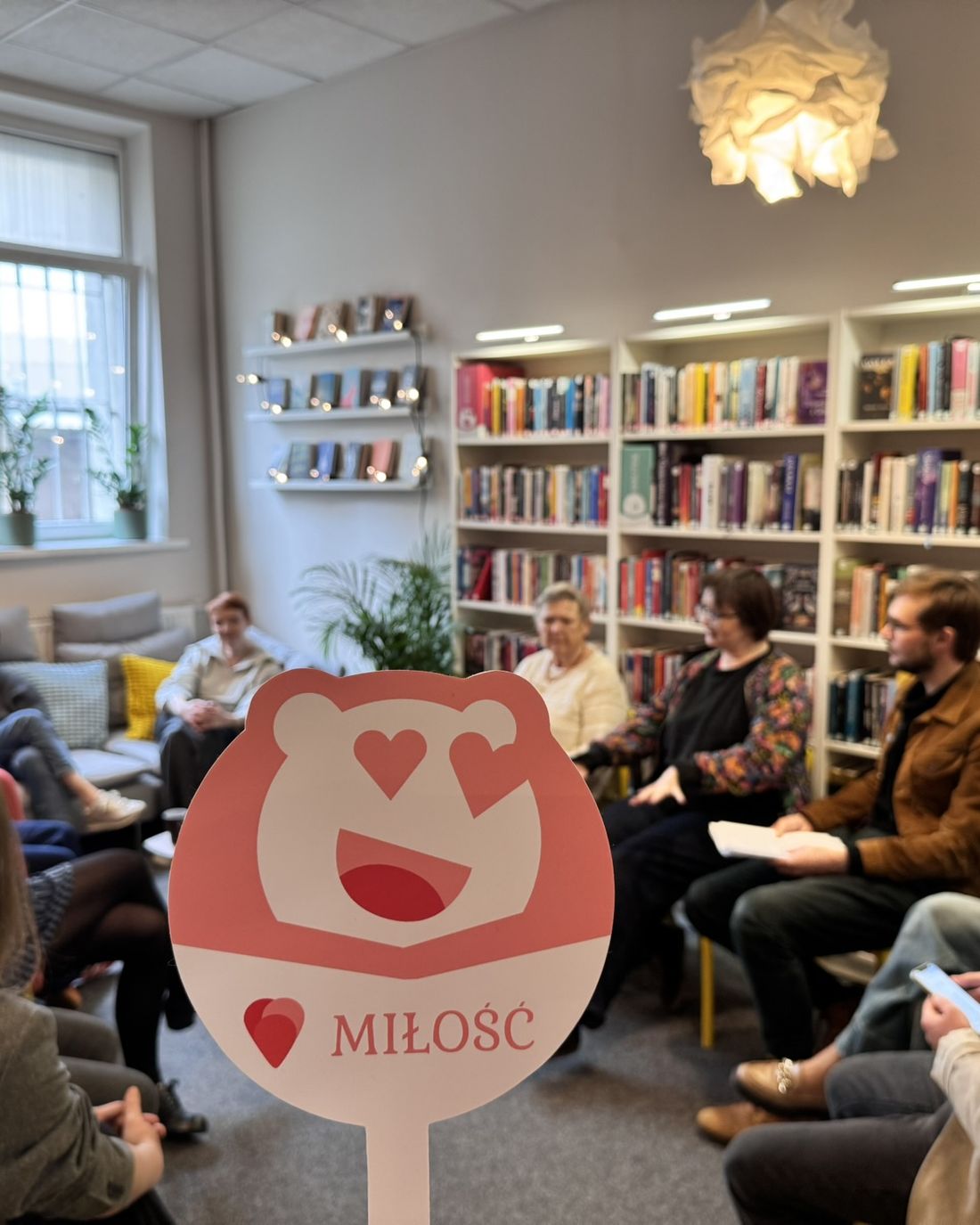
A text is read, often aloud. Everyone takes time to welcome what it brings up: an emotion, a sensation, an image. The facilitator supports this exploration without imposing an interpretation. The same words do not mean the same thing to everyone: we take time to share that gap. Cognitive science helps decode what is happening.
We link what the text opens up to what each person is going through, and we listen to others. Talking about yourself in front of a group is not easy: we often go first through the character, what they feel, what they would do, before speaking in our own name.
One of our signature activities, the multiplication of literary points of view, takes this further: stepping into the shoes of several characters to imagine how each would react in our place. We created it from the multiplication of points of view developed by the medical doctor and psychotherapist Jacques Fradin.
This is the longest part of the session.
Everyone turns what they have experienced into something to take away: a sentence, an idea, a gesture to try, a desire to read.
The session closes on a compass, one to four ideas to keep, and often on a book given as a gift.
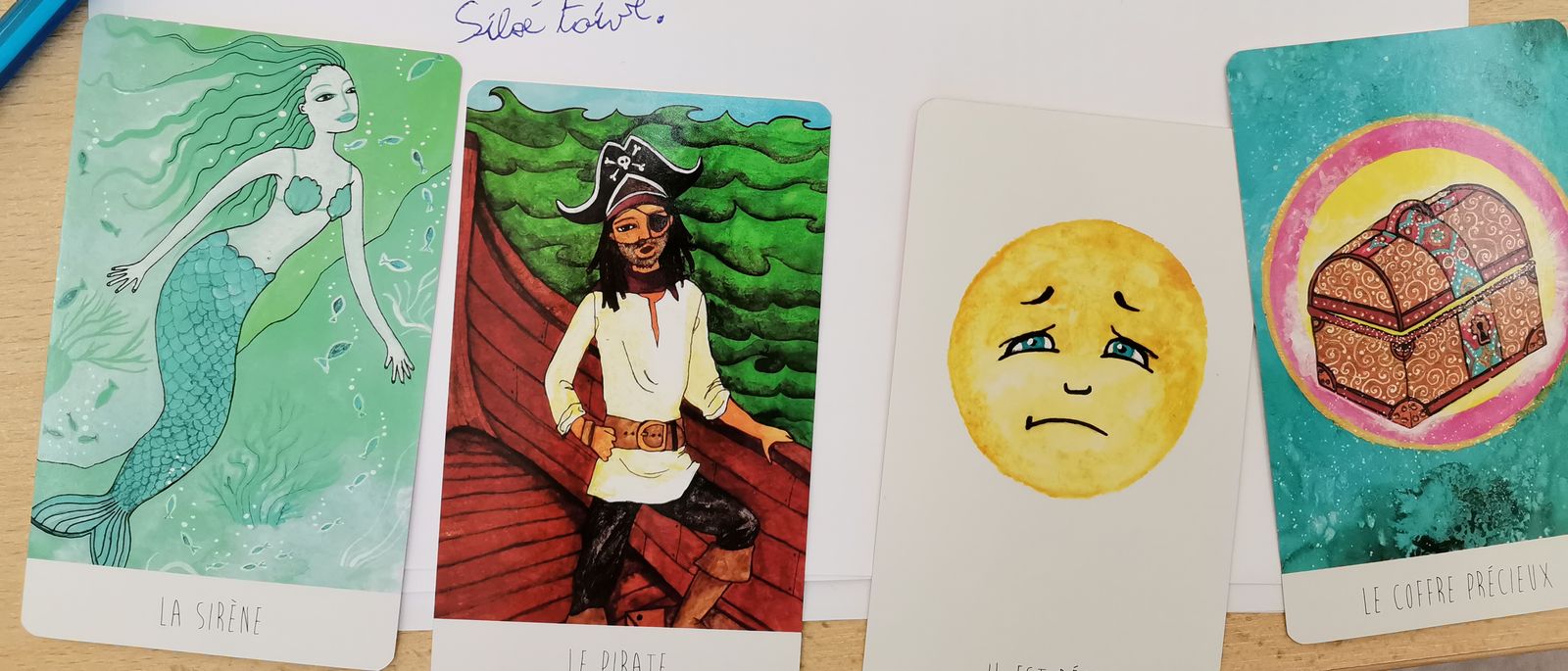
Approaches drawn from art or play support expression beyond reading: writing, drawing, theatre, cards, carefully chosen inventive objects and our literary tarot, which brings characters from novels into play. We love enriching the sessions with new creative contributions.
The framework matters as much as the texts: a welcoming and discreet stance, opening and closing gestures, and the ability to recognise when an emotion overflows and it is time to hand over to a psychotherapist or a doctor. Céline Mas documented this approach in La lecture pour réussir sa vie professionnelle (Dunod, 2025).
Workshop themes
Themes are set before the workshop or cycle; they ensure a clear and engaging structure for participants. They also provide a framework for assessing, at the end, what the workshop brought.
We can also design a bespoke theme with you, as close as possible to your objectives.
For whom
For a long time, support through books was the privilege of those who could read and of the wealthiest classes.
We want to make reading experiences accessible to people from all backgrounds, including those who feel far from books or cannot afford to buy them.
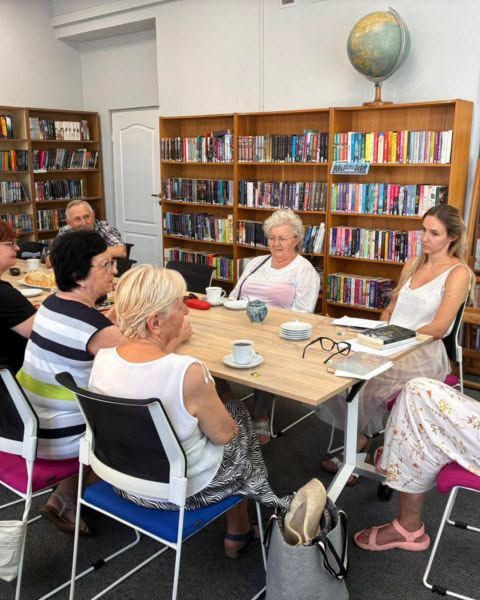
Our workshops take place where people live their lives: libraries, hospitals, local authorities, charities, care settings, prisons, child protection services and schools, in France and abroad.
Workshops and cycles for the people you support, and training for your teams.
Institutions and charities →Coaches, therapists, carers, librarians: learn to design and run your own workshops.
Train in bibliotherapy →In companies, our work takes two forms:
training managers to decide
or offering employees and their families a cultural activity around the pleasure of reading.
Do you represent an organisation or fund a charity? We build with you workshops, cycles and team training suited to the people you serve.
Would you like to run sessions? Discover the Love for Livres Academy paths and the supervision options.
Choosing a text
We choose a text for the people who will encounter it: their age, their relationship with reading, their expectations and the context of the session. We look at its language, its length, the emotions it may stir and the discussions it may open. Its reputation is not enough: it must suit this audience and this intention.
Then come six precise criteria that allow us to carry out sensitive, suitable selections. The KEI© (Key Emotion Indicator) also makes it possible to measure the text's emotional “valence”.
Today we have a database of about 1,000 texts matching a wide range of workshop configurations. It is constantly enriched by our work in the field.
With people in vulnerable situations, this attention is heightened. Some texts can revive a painful experience: the choice of readings, the possibility of stepping out of a discussion and referral to other competent professionals, when necessary, are part of the framework.
Tales and myths stage the great human questions; they help us reread an ordeal.
The novel lets us live a character's emotions; with older people, it opens the way to writing memories.
Poetry is evocative, accessible and charged with emotion. We use it in particular to project into the future and to gain clarity about a situation.
The letter creates an intimate relationship with writing; it helps untangle an inner conflict or a recurring question.
Theatre gives a living voice; it serves self-assertion.
The essay provides keys and feeds debate. It is not our preferred kind of text, but we sometimes use it when we want to approach a subject differently.
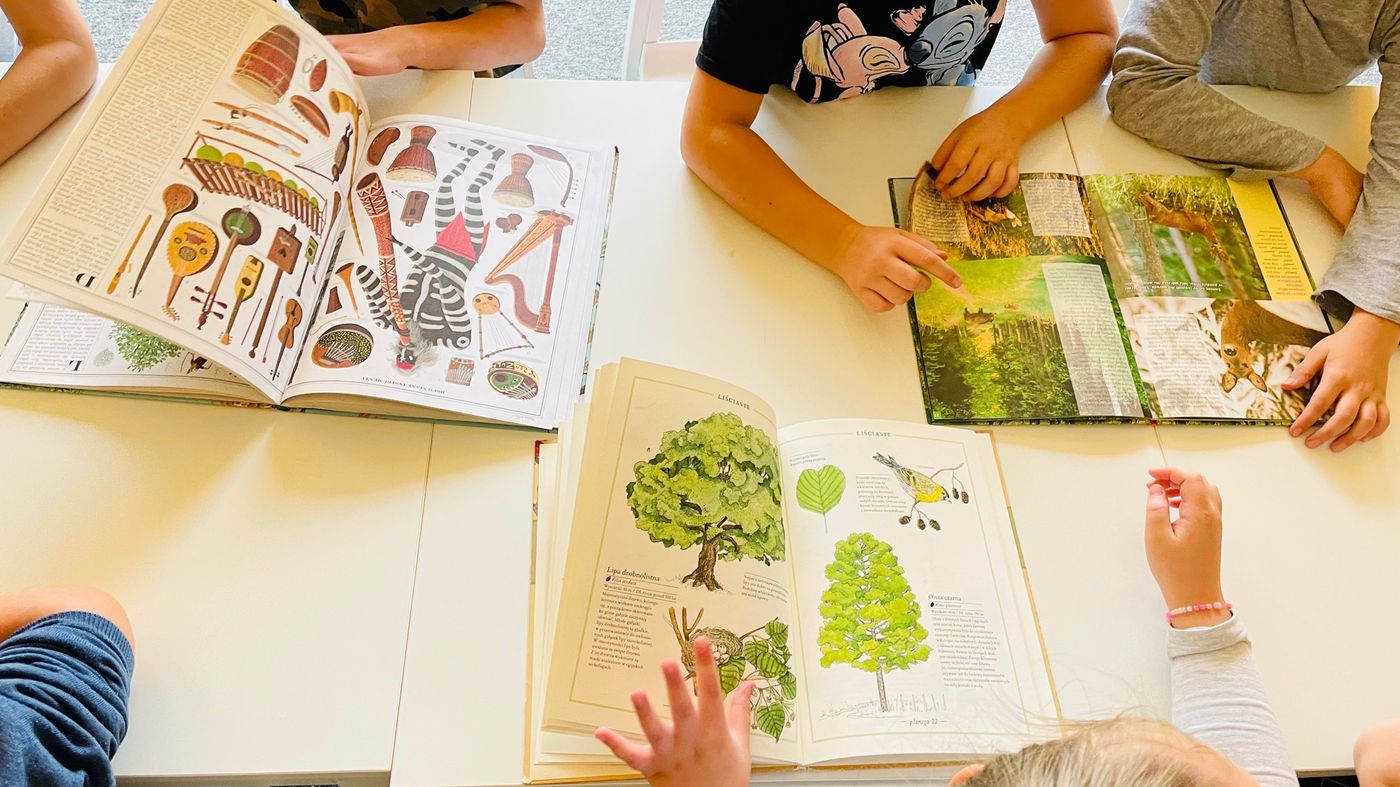
Images say what words do not, and help children who struggle to focus to express what they feel.
A genre is never chosen on its own: it always depends on the audience and the intention.
10 years in the field
Since 2016, Love for Livres has run nearly 500 bibliotherapy workshops and trained more than 60 bibliotherapists.
Among our fields of work: a programme led by the Prefecture of Meurthe-et-Moselle with young people, residents of priority neighbourhoods and older people; 3 years with young people in care who were far from reading; training for the teams of Bibliothèques Sans Frontières; programmes to support women who have experienced gender-based and sexual violence in France and Spain.
We also coordinate Libraries of Emotions for Good, a European project supported by Creative Europe from 2025 to 2027: 9 partners in 7 countries, librarians trained and dedicated bibliotherapy spaces created in public libraries. The project is among the examples of good practice in the European report “Strengthening Europe through public libraries”, written in 2026 by an Open Method of Coordination expert group mandated by the Council of the European Union, in the section on bibliotherapy and mental health support through reading.
Our advisory council brings together Samah Karaki, neuroscientist, Ornella Godard, neuroscientist, Guila Clara Kessous, UNESCO Artist for Peace, Pascal Beucler, semiologist, and the publisher Jean-Jacques Salomon.
We evaluate what our programmes achieve, through questionnaires built for each project and, depending on the project, through the KEI©, our impact-assessment method applied to emotions.





“RNDH members greatly appreciated your sessions at the Dijon days, and we would like to invite you again for our days in Saumur in June 2027.”
What research says
Research has been exploring the links between reading, emotions and well-being for years. Other, fewer studies focus on bibliotherapy. In 1995, Pardeck and Markward drew a conclusion that still holds: it is not a perfect technique, but it brings benefits without a huge budget when practised seriously and ethically.
In 2019, a major World Health Organization (WHO) report on the arts and health, then in 2022 the European Culture for Health report, highlighted what cultural practices, including reading, bring to well-being.
In France, Sophie Marinopoulos's report on cultural health, submitted in 2019, makes reading and cultural nourishment essential dimensions of children's development and well-being.
Cognitive science describes what readers have long sensed intuitively. The psychologist Keith Oatley compares fiction to a flight simulator for social life: we practise understanding others. At Emory University, students read a novel night after night and had an MRI scan every morning: reading changed connectivity in regions linked to bodily sensations, and these changes remained visible several days later. Other work associates reading fiction with a more nuanced perception of others and a less self-centred outlook. A Cambridge study of more than 10,000 adolescents associates reading for pleasure from an early age with better cognitive performance and better well-being.
In our own fieldwork, two European projects run in public libraries in seven countries brought together more than 160 participants: 96% expressed positive emotional responses, 95% found the sessions met or exceeded their expectations, 87% wanted to come back.
Throughout life. A scientific editorial published in 2026 brings together work on reading, well-being and cognitive health at different ages. It notably highlights associations between stimulating activities such as reading and slower cognitive decline in older people. It also reports encouraging results on shared reading, the sense of connection and loneliness. [Sahakian, Perrin and Langley, 2026.]
We distinguish the feelings gathered after a session from the effects that only appropriate research can establish. Our evaluations help us improve the workshops and document participants' experience. It is to observe honestly what our workshops achieve that we evaluate them, publish, and conduct research with Ghent University on the measurable effects of bibliotherapy.
Pardeck J. T. and Markward M. J., 1995. Fancourt D. and Finn S., What is the evidence on the role of the arts in improving health and well-being?, WHO Europe, 2019. Culture for Health, report, 2022. Marinopoulos S., Une stratégie nationale pour la santé culturelle, report to the French Ministry of Culture, 2019. Oatley K., Such Stuff as Dreams, 2011. Berns G. et al., Brain Connectivity, 3(6), 2013. Castano E. et al., PLoS One, 15, 2020. Sun Y.-J. et al., Psychological Medicine, 54(2), 2024. Our publications: Saint-Aroman M., Taieb C., Mas C., Agaësse A., “Bibliotherapy, Interest and Relevance: A Pilot Study”, Journal of Psychiatry and Cognitive Behaviour, 5:159, 2022; Mas C., “Pioneering Emotional Well-being through Books: European Case Studies”, European Journal for Biblio/Poetry Therapy, 2(1), 53-58, 2026, doi:10.65018/EJBPT-vol2iss1pp53-58.
Approaches and history
The term bibliotherapy covers several approaches that can overlap.
Clinical bibliotherapy is carried out by care professionals, in the face of significant emotional or behavioural difficulties.
Developmental bibliotherapy supports the development and fulfilment of people who are not ill; teachers and support workers can practise it.
Creative bibliotherapy is most often experienced in groups, around varied fiction that opens up discussion and expressive activities.
Prescriptive bibliotherapy uses self-help books, in a clinical setting or at home.
At Love for Livres, fiction, emotions and cognitive science are central.
Practitioners often combine these approaches. All rely on a twofold movement that we practise in our workshops.
Identification: the reader empathises with characters who live what they live, or what they have never lived.
Interaction: reading is shared, and the group learns to welcome each person's emotions and interpretation.
When we work with patients, we support the care teams, never replace them.
The library of Ramesses II, “the house of healing for the soul”
Samuel Crothers coins the word
Sadie Peterson Delaney at Tuskegee
Caroline Shrodes lays the theoretical foundations
The term is recognised
The Greek historian Hecataeus of Abdera reports that an inscription adorned the library of Ramesses II in Thebes: “the house of healing for the soul”. In Antiquity, Aristotle spoke of catharsis, Aelius Aristides of “literary remedies”. Montaigne sought in books “the knowledge of myself”, and Proust saw in reading “a kind of curative discipline”.
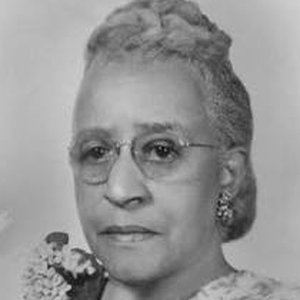
It was a librarian who gave bibliotherapy its modern form. Born in 1889, a poet, a women's rights activist trained in social work, Sadie Peterson Delaney joined the Tuskegee hospital in Alabama in 1924, which treated First World War veterans. The library had two hundred books and a table. She chose readings according to each patient's history and wounds, wheeled book trolleys into the wards, projected pages for those who could no longer hold a book, and taught Braille to the blind. Within a year, the library grew to four thousand volumes, and librarians even came from Europe to observe her method. Her work placed knowledge of people and accessibility at the heart of the practice.
The word itself appeared in 1916, written by the American minister and essayist Samuel Crothers, in a satirical dialogue in the Atlantic Monthly in which a character prescribes books like remedies: “A book may be a stimulant or a sedative or an irritant or a soporific. The point is that it must do something to you.” Caroline Shrodes laid its theoretical foundations in 1950, and the American Association of Hospital and Institution Librarians recognised the term in 1966. In France, Lucie Guillet had patients read poetry after the Second World War. In the United Kingdom, the Reading Agency turned it into national programmes; in the United States, Reach Out and Read puts books in paediatricians' offices.
Bibliotherapy is developing faster in the 21st century, but it rests on this long and often little-known tradition.
Bibliotherapy is a practice of support through books. Chosen texts and a suitable framework make it possible to explore what reading brings up: emotions, questions and new points of view. At Love for Livres, sessions are facilitated by a trained person.
No. Despite its name, it is neither a medical practice in the strict sense nor a psychotherapy, and it replaces no care. It can, however, accompany treatment in a clinical setting, in conjunction with the care teams.
Four are generally distinguished: clinical, carried out by care professionals; developmental, to support the fulfilment of people who are not ill; creative, in groups, around fiction and expressive activities; prescriptive, with self-help books. The choice depends on the audience, the objective and the skills of the person facilitating. Practitioners often combine them.
An opening, then three stages: understand, connect, commit. We read together, often aloud, we talk first through the characters, and everyone leaves with something. Nobody has to speak, and you do not need to be a keen reader to take part.
No bibliotherapy training currently leads to a recognised qualification in France. All the more reason to choose demanding training. Many bibliotherapists are already book, education or support professionals: coaches, therapists, carers, teachers or librarians. Train in bibliotherapy
Yes, with texts and a framework suited to their age. In adolescence, talking about yourself in front of others is delicate: going first through the characters makes discussion much easier. We run workshops for children and teenagers, including those supported by child protection services.
Mostly fiction: tales, novels, short stories, poetry, theatre, letters, comics, manga and more, and sometimes essays or images. The text is chosen for what it can open up for that particular audience, never for its reputation alone.
Would you like to organise a workshop or train? Let's take thirty minutes to talk about your audience, your expectations and the format that could suit you.